

This time of year stretches everyone. Deadlines loom, time is tight, and balancing work with life feels impossible. Chances are, your team is already stressed.
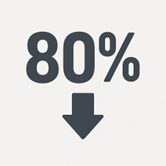
Stress doesn’t just make work harder – it changes how people think. It can reduce a person’s ability to process information by as much as 80%. People hear less, absorb less, and remember less. They react to perceived threats rather than rolling with the punches.
In project-based organizations, where communication is key and change is constant, these effects show up quickly. Your leadership style can help your team stay grounded and effective when pressure rises. In my experience, five actions have outsize impact.
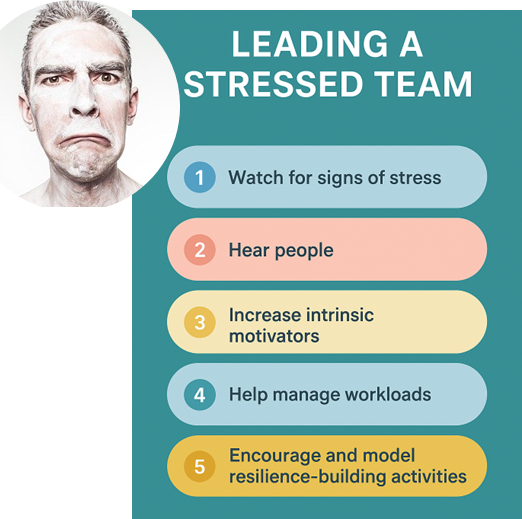
1. Be vigilant for signs of stress
Stress rarely announces itself directly. It shows up in the work.
- Incomplete or stalled deliverables
- Dropping productivity
- Lower quality outputs
- Avoidable mistakes
These are early-warning signals, not character flaws or performance failures. Treat them as indicators that your team needs support.
2. Hear people
As Stephen Covey said in “The 7 Habits of Highly Effective People,” seek first to understand. (That reference dates me, doesn’t it?)
- Visibly acknowledge the high stress level across the organization.
- Recognize the good work that people are doing as well as the challenges they face.
- Demonstrate – consistently – that you care about their well-being.
Listening isn’t the same as cheerleading. It signals stability. It grounds your team and reduces fear and doubt. Calm leadership is infectious and helps counter the spread of stress. You can read more about calm leadership and organizational holding here.
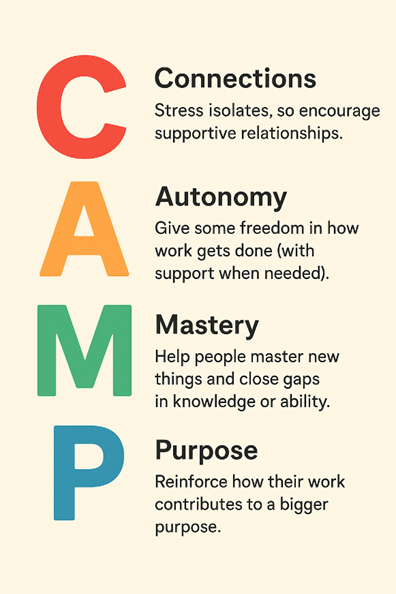
3. Increase motivation with CAMP
Intrinsic motivators keep people committed and resilient, even when then power of extrinsic motivators crumbles under stress. Use the CAMP framework.
CAMP restores a sense of agency – especially important when the surrounding environment feels ambiguous.
4. Manage workloads
An overwhelming workload leads to inefficient thrashing. Create space for your teams to think and execute.
- Offload some work by shifting tasks or bringing in temporary help.
- Help people focus on the vital work; defer the rest.
- Offer flexibility in how work gets done.
- Reduce distractions that fragment attention.
Leadership here is about creating focus and preserving scarce cognitive bandwidth. When people can focus, stress drops and quality returns.
5. Encourage and model resilience-building activities

Resilience is a capability that can be built, not an innate personality trait. Your behavior sets the standard. Show by your example that you invest in building resilience.
- Biological: Movement, breathing, enough sleep, nutritious food, staying hydrated.
- Psychological: Taking a moment for fun, showing gratitude, helping others, taking meaningful breaks.
- Environmental: Quiet spaces, fresh air, enough light, the chance to step away.
Small acts compound. One five-minute reset can prevent hours of rework.
Why this matters now
Stress thrives in the shadows of ambiguity. When the path isn’t clear, people fill the gaps with speculation. Silence becomes a threat. Leaders who stay present, calm, and communicative help teams navigate uncertainty without spiraling.
You don’t need all the answers. You do need to:
- Replace speculation with facts where possible.
- Acknowledge what you don’t yet know.
- Reinforce confidence in your team’s ability to succeed.
These behaviors reduce stress and restore forward momentum.
A final thought
Your team doesn’t need perfect conditions to perform well. They need leadership that recognizes the load, reduces what can be reduced, and strengthens the intrinsic drivers that help people do their best work.
As you look ahead to next week, ask yourself which of these five actions would most help your team right now?
I teach and consult about highly effective projects, portfolios, and teams. You can contact me at [email protected] and read more at spspro.com/blog.